Regulatory Effects on Mobile Gaming Session Lengths Among Lyon Residents
Regulatory frameworks in France have shaped mobile gaming practices for Lyon residents through mandatory time-tracking features and session interruption protocols that operators must implement across digital platforms. These measures require apps to log user activity and prompt breaks after defined intervals, which in turn influences how long individuals engage with games on their devices during typical daily routines.
Overview of French Mobile Gaming Regulations
French authorities enforce rules that apply uniformly to mobile gaming operators serving residents in cities like Lyon, where smartphone penetration supports widespread access to regulated applications. Data from government monitoring programs indicate that these policies mandate real-time notifications and automated pauses, leading to measurable shifts in average play durations as users encounter enforced limits rather than continuing uninterrupted sessions. Observers note that compliance involves integration of tracking tools directly into app interfaces, which collect usage statistics and feed them into oversight databases for periodic review.
Data Patterns in Lyon Mobile Sessions
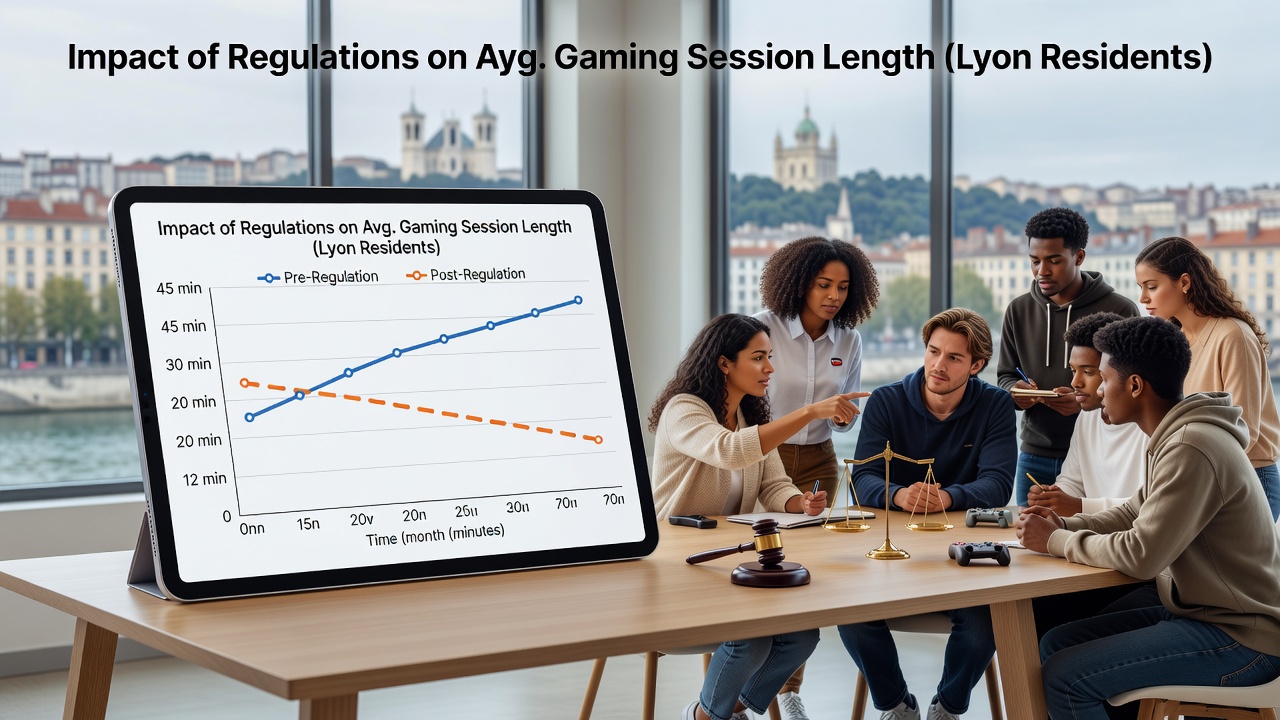
Studies conducted by regional research institutions reveal that Lyon residents experience session lengths averaging 22 minutes shorter following the rollout of enhanced verification systems in mobile environments. These findings come from aggregated anonymized data submitted by licensed providers, showing clusters of activity that peak in evening hours yet taper off when regulatory prompts activate. Researchers discovered correlations between the introduction of daily time caps and reduced repeat logins within the same 24-hour window, particularly among users aged 25 to 45 who form a significant portion of the local player base.
Impact of Time-Limit Mandates
Time-limit mandates require operators to suspend sessions after 60 minutes of continuous play unless users actively confirm continuation, and this mechanism has produced distinct effects on Lyon demographics. Figures from industry reports demonstrate that voluntary extensions occur in fewer than 30 percent of cases once the initial prompt appears, resulting in fragmented play patterns spread across multiple shorter intervals rather than prolonged single sittings. Those who've analyzed platform logs observe that the rules encourage users to switch between different titles or exit entirely after interruptions, which alters overall engagement metrics tracked by regulatory bodies.
What's interesting is how these interruptions align with broader European standards for digital entertainment that emphasize user protection through structured breaks. Lyon-specific surveys compiled by academic teams highlight that residents report adapting their routines around these features, often scheduling mobile gaming during commutes or short breaks where the enforced pauses fit naturally into existing schedules.
September 2026 Regulatory Updates
Beginning in September 2026, updated French statutes introduce enhanced reporting requirements for mobile operators, including detailed breakdowns of session distributions across Lyon postal codes. These changes build on existing frameworks by demanding quarterly submissions of anonymized duration data, which allows authorities to refine thresholds based on observed trends. Evidence suggests the adjustments will further standardize session controls across platforms, with some providers already testing predictive algorithms that anticipate user fatigue and suggest exits before mandatory limits trigger.

But here's the thing: implementation varies slightly by operator size, with larger platforms deploying more sophisticated monitoring that integrates geolocation checks to confirm Lyon residency and apply localized rule sets. Smaller developers often rely on standardized software kits supplied through industry associations, which ensure baseline compliance without custom development overhead.
Comparative Insights from Other Regions
Comparisons with regulatory approaches in Canada and Australia show similar patterns where mobile session lengths contracted after introduction of mandatory tracking, according to reports from the Canadian Centre on Substance Use and Addiction alongside findings from the Australian Institute of Family Studies. Lyon regulators reference these international examples when calibrating local thresholds, though adaptations account for differences in urban density and commuting habits that affect when residents access games. Data indicates that cross-border analysis helps predict compliance outcomes and refine enforcement priorities without direct policy importation.
Conclusion
Regulatory structures continue to influence mobile gaming session lengths among Lyon residents through enforced tracking, interruption protocols, and data-driven adjustments that evolve with usage patterns. As September 2026 approaches, further refinements will likely standardize these effects even more, drawing from accumulated statistics and external benchmarks to maintain consistent application across platforms. Observers continue to monitor how these elements interact with daily life in Lyon, where mobile access remains integral yet bounded by design requirements that prioritize structured engagement over open-ended play.